
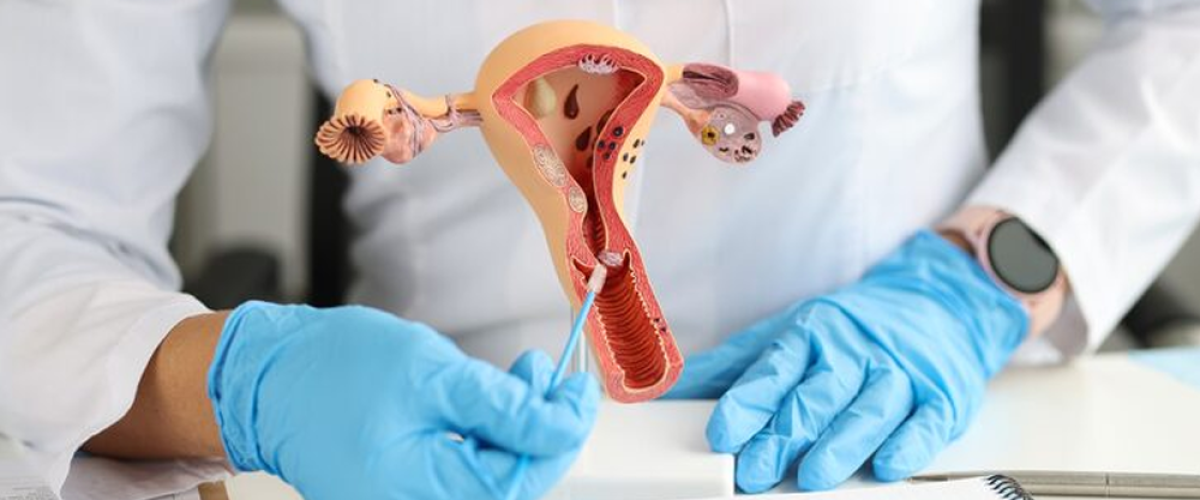
The cervix, which is where the bottom portion of the uterus connects to the vagina, is where cervical cancer originates. It is mostly brought on by a chronic infection with high-risk HPV, particularly types 16 and 18. The following are additional risk factors:
- Consuming tobacco
- Compromised immune system (HIV, for example)
- Oral contraceptive use over time
- A number of pregnancies
- Early sexual relations
Prevent:
- Cervarix and Gardasil are HPV vaccines.
- Precancerous alterations are detected by routine Pap smears.
- HPV examinations
Symptoms
Early stages may be asymptomatic, but as cancer progresses, symptoms include:
Abnormal Vaginal Bleeding
- Bleeding between periods
- Postmenopausal bleeding
- Bleeding after intercourse
Unusual Vaginal Discharge
- Watery, bloody, or foul-smelling discharge
Pelvic Pain
- Pain during sex
- Persistent lower back or pelvic pain
Advanced Symptoms
- Swollen legs (if cancer spreads to lymph nodes)
- Weight loss, fatigue
- Difficulty urinating or blood in urine (if invading bladder)