
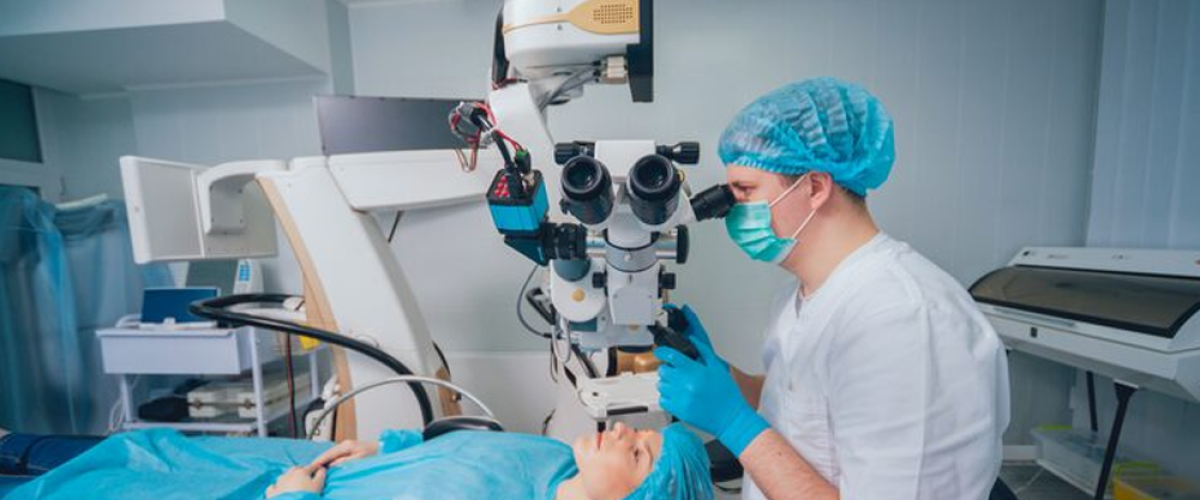
In a corneal transplant (keratoplasty), healthy donor tissue is used to replace all or a portion of a diseased or damaged cornea. The purpose of the procedure is to treat severe corneal conditions, lessen pain, or restore vision.
Cornea Transplant Types:
- The procedure known as penetrating keratoplasty (PKP) replaces the entire cornea.
- The inner endothelium is preserved during Deep Anterior Lamellar Keratoplasty (DALK), which solely replaces the outer and middle layers.
- By replacing only the innermost endothelium layer, endothelial keratoplasty (DSEK/DMEK) allows for a quicker recovery.
Typical Causes of Surgery:
- Keratoconus, or cornea with a cone shape
- Corneal scarring (due to traumas or infections)
- Fuchs' dystrophy, or loss of endothelial cells
- Corneal ulcers (infections that don't heal)
- Bullous keratopathy (endothelial failure-induced swelling)
Signs of a Cornea Transplant Requirement
- Severe blurring of vision that cannot be fixed with contacts or glasses
- Excessive sensitivity to light (photophobia)
- Chronic eye pain
- Clouding or swelling of the cornea
- Scarring of the cornea (visible opaque or white patches)
- Vision distortion (due to uneven form or keratoconus)