
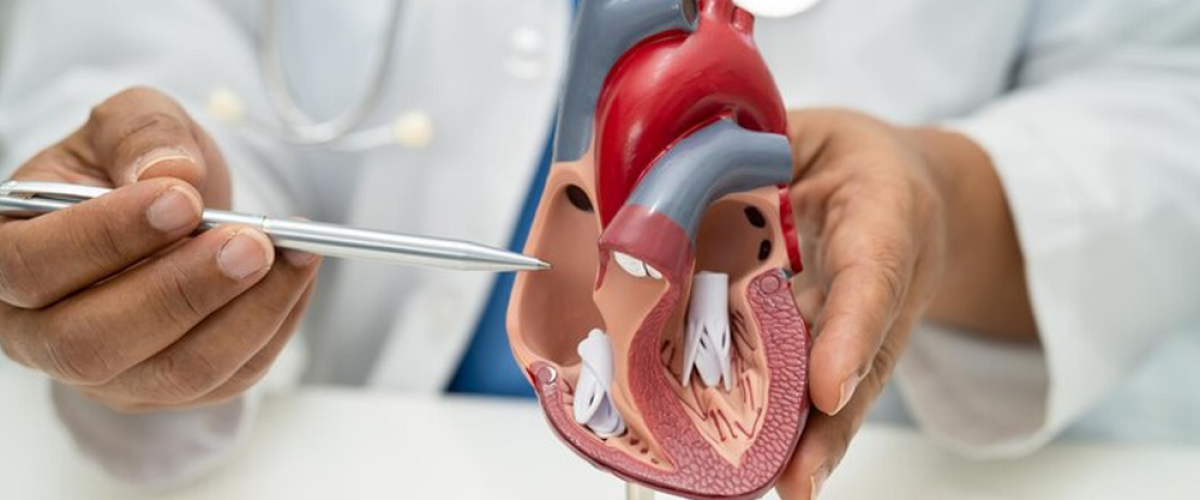
In order to replace a diseased or damaged heart valve with a biological tissue or artificial valve, surgery is required. This is usually required when stenosis or regurgitation of the valves significantly impairs heart function and cannot be treated with medicine or repair.
Replacement Heart Valve Types:
1. Mechanical Valves
- Constructed from sturdy materials (titanium, carbon).
- Long-lasting but need anticoagulants (blood thinners) for the rest of their lives to avoid clots.
- For instance, the St. Jude Medical valve.
2. Biological Valves (Tissue)
- Created using human or animal donor tissue (porcine or bovine).
- May wear down in 10–20 years and necessitate reoperation, but they don't require long-term blood thinners.
- Bovine (cow), Homograft (human donor), and porcine (pig) are common varieties.
3. Transcatheter Aortic Valve Replacement (TAVR)
- Minimally invasive procedure for aortic stenosis, often in high-risk patients.
- Valve is inserted via catheter (through the femoral artery or chest).
Common Reasons for Replacement:
- Aortic stenosis (narrowing of the aortic valve).
- Mitral regurgitation (leaky mitral valve).
- Endocarditis (infected valve).
- Congenital defects (e.g., bicuspid aortic valve).
Surgical Approaches:
- Open-heart surgery (traditional, involves sternotomy).
- Minimally invasive (smaller incisions, faster recovery).
- Robotic-assisted (precise, less trauma).
Recovery & Risks:
- Hospital stay: 3–7 days (longer for open-heart).
- Recovery time: 6–8 weeks (full healing may take months).
- Risks: Bleeding, infection, stroke, arrhythmias, valve failure.
Lifestyle After Surgery:
- Anticoagulants (if mechanical valve).
- Regular follow-ups (echocardiograms).
- Heart-healthy diet & exercise (as advised by a cardiologist).